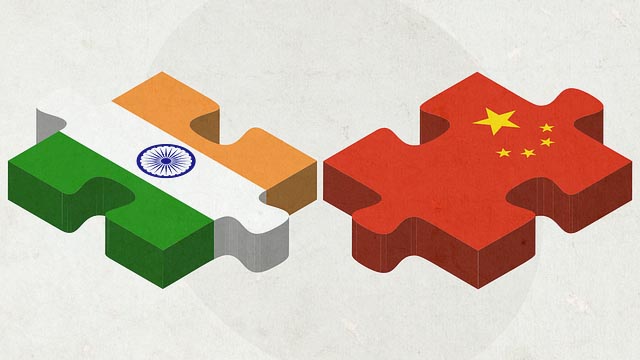
The Press Trust of India (PTI) reported that India-China bilateral trade grew to record levels in 2022. Citing data released by the Chinese government, PTI reported that India-China bilateral trade volume increased by 8.4% in 2022 compared to 2021, from US$125 bn to $135.98 bn amid frosted relations between both countries.
Since the 2020 Galwan Valley standoff, relations between India and China have reached the nadir. India is also a member of the Quad, the US-led military alliance formed against China. In addition, India and China have taken conflicting standpoints on various geopolitical issues in recent times. In this situation, the growth of India-China bilateral trade shows a ray of hope through which the relationship between the two countries can be improved.
Although India-China bilateral trade increased in 2022, this did not end India’s perennial trade deficit problem. Rather, for the first time in 2022, India’s deficit in India-China bilateral trade exceeded $100 bn. Whereas India’s trade deficit in India-China bilateral trade was $69.38 bn in 2021, it increased to $101.02 bn in 2022.
China’s overall trade growth
China’s overall foreign trade increased in 2022, even though the coronavirus outbreak has battered its economy for nearly two years and various pandemic-related restrictions, including the “zero covid” policy, remained in force until November 2022. Chinese newspaper Global Times reported this news using data from Chinese customs.
In 2022, Chinese foreign trade increased for the first time to reach $5.96 trillion. At the same time, China’s merchandise exports increased by 10.5% compared to 2021, and imports increased by 4.3%, resulting in a trade surplus of 5.3 trillion yuan to 5.9 trillion yuan.
China’s solar cell, lithium battery, and vehicle exports grew the most, 67.8%, 86.7%, and 82.2%, respectively. Additionally, exports of labour-intensive products such as bags, shoes and toys grew by 32.6%, 24.4% and 9.1%, respectively.
According to the Global Times’s report, China mainly imported energy in 2022, such as crude oil, natural gas and coal, which accounted for 17.6% of its total imports. Imports of agricultural products were worth 1.57 trillion yuan, an increase of 10.8% over 2021.
The increase in foreign trade has also increased the number of foreign commercial enterprises in China. A total of 598,000 foreign commercial enterprises are currently operating in China, an increase of 5.6% compared to 2021, of which 500,000 are private enterprises. These enterprises’ total foreign trade volume reached 21.4 trillion yuan in 2022, an annual increase of 12.9% over 2021.
China’s foreign trade amid geopolitical tensions
In 2022, China also suffered from the US-led diplomatic polarisation worldwide, especially on Russia’s special military operation in Ukraine. The plan of the US-led Western camp to cripple Russia economically and diplomatically has failed as major powers like China, and India did not join the Western alliance against Russia.
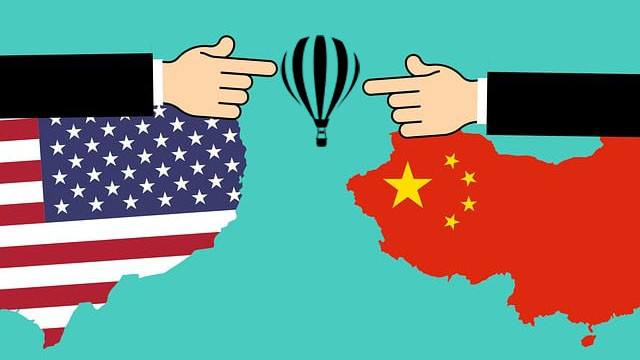
The US-China conflict intensified in August 2022 over Taiwan. US House of Representatives Speaker Nancy Pelosi’s Taiwan visit and the US government’s blatant violation of the “One China” policy have intensified tensions between China and the US, resulting in muscle-flexing by both powers.
Both before and after the withdrawal of China’s “zero covid” policy, the Chinese government and the ruling Communist Party (CPC) were criticised in the West. The US mainstream media routinely campaigned against the CPC and the Chinese government. Yet US-China bilateral trade reached 5.05 trillion yuan in 2022. China’s bilateral trade with European Union (EU) countries reached 5.65 trillion yuan.
China’s bilateral trade with Russia increased by 34.3% year-on-year in 2022, reaching 1.28 trillion yuan, which is unprecedented and indicates how the US-led unipolar world order is weakening. Like India, China is among many countries that have refused to heed the Western demand to boycott Russia.
China’s exports to Russia increased by 17.5% in 2022, and its imports from Russia increased by 48.6%, which is also a strong sign of China’s tacit support for Russia during the war and defying sanctions imposed by the Western bloc.
China’s trade with the ASEAN countries increased by 15% in 2022 vis-à-vis 2021. China’s trade volume with the ASEAN countries in 2022 was $9.7 bn, which is remarkable in the current geopolitical scenario.
It’s not surprising that the US foreign policy hawks may be disappointed if they see the increasing trade between China and the ASEAN countries. The US has been trying to rope several South and Southeast Asian countries into its regional anti-China military axis. It has allied with India to form an “Indo-Pacific” war theatre in South Asia.
India-China bilateral trade issues
It’s positive that India-China bilateral trade has remained free from the strained diplomatic relations and growing Sinophobic ultra-nationalist rhetoric in Indian politics, which involves the ruling Bharatiya Janata Party (BJP) and most opposition parties, including the Indian National Congress (INC).
The Chinese media has also hyped anti-India rhetoric in recent years, albeit subtly and refrained from using inflammatory materials, unlike mainstream Indian media entities.
However, despite India’s growing trade with China and other countries, the growing trade deficit is a ticking time bomb that New Delhi should try to defuse. The foreign trade deficit isn’t a quintessential feature of India-China bilateral trade alone but with most big powers.
According to official data, India-US bilateral trade is estimated to be worth $127.55 bn from April to November 2022. Out of this, India imported goods, services, etc, worth $69.33 bn, which was $65.65 bn in 2021, and exports of goods and services were $58.22 bn, which was $52.46 bn in 2021.
India’s deficit in India-US bilateral trade during April-November 2022 was $11.11 bn, slightly lower than $ 13.19 bn in 2021. However, India’s exports did not increase significantly overall except in services.
Currently, as India’s foreign trade deficit is widening, therefore its foreign exchange earnings are declining, and this is hurting the value of the rupee. Although India increased its oil imports from Russia, ignoring the US eyeballs, on a rupee-rouble basis in 2022, India did not start trading in its currency with China or any other country.
Despite talk of reducing imports from China, especially since the 2020 Galwan Valley skirmishes between the Chinese People’s Liberation Army and Indian Army that killed many soldiers, India’s imports from China have not decreased but rather increased. But the reason why India is not able to increase its exports to China lies in the overall system’s inherent problems.
India can’t compete with China economically in the current situation as it lags in terms of infrastructure and industrial development. But India should benefit from China’s economic growth by improving bilateral relations.
To increase the labour force’s productivity, India should also increase investments in public health and the public education system for human resource development through a state initiative. By increasing the labour force’s productivity, India can attract foreign capital investment in manufacturing and infrastructure, which can help offset the deficit in goods production and foreign trade.
As the CPC under Xi Jinping is cracking down on Chinese and foreign-owned private companies by developing its infrastructure and human resources, India can attract those corporations to invest in India’s industrial and infrastructure development, which in the long term will help grow India’s industry and commerce. Such growth can correct the imbalance in India-China bilateral trade and can help increase India’s overall income from foreign trade and reduce the trade deficit.
East Post is an independent geopolitical analysis portal covering South Asia and global power dynamics for international audiences. Views expressed are analytical and do not constitute endorsement of any state or non-state actor.
Join our channels on Telegram and WhatsApp to receive geopolitical updates, videos and more.